Edward Thomas 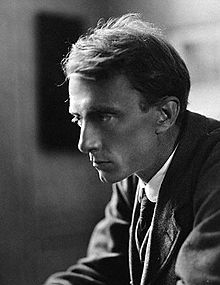
Edward Thomas composed more than 140 poems in the two years prior to his embarkation to France. To support his wife and three children, he had maintained a successful career as a prolific writer of prose and literary critic for the Daily Chronicle(1), but now discovered a new voice, encouraged by his close friend, American poet, Robert Frost.(2)
Volunteering for the Artists’ Rifles in July 1915,
Thomas became a map reading instructor in
Essex, aged 37, he could have honourably
remained in this post for the rest of the war.(3). However, France preyed heavily on his mind,
and a year later prompted by Frost’s poem ‘The
road not taken’(4) he applied for a commission
overseas as 2nd Lieutenant, 244 Siege Battery,
Royal Artillery.

![]()
‘As the Team’s Head-Brass’ was written just eight
weeks before making his decision.(5) Pressed on his
reason for enlisting by Eleanor Farjeon, 'he bent
down and scooped a handful of soil from around
his shoe and said “literally for this"'.(6)
Thomas was killed in action on Easter Sunday, 9 April 1917, directing fire at a forward observation post in the 1st hour of the Battle of Arras.(7) A creased photograph of his wife, Helen, was found in the pocket of his uniform.(8)
Publishers Selwyn and Blount planned to release his first poetry volume ‘Poems’ later that year under his pseudonym, Edward Eastaway, but he did not live to see this work in print. These poems based in the Hampshire countryside around the village of Steep now form part of the powerful legacy of ‘war poetry’.
AS THE TEAM'S HEAD-BRASS by Edward Thomas (extract)
... I sat among the boughs of the fallen elm
That strewed the angle of the fallow, and
Watched the plough narrowing a yellow square
Of charlock. Every time the horses turned
Instead of treading me down, the ploughman leaned
Upon the handles to say or ask a word,
About the weather, next about the war....
.
... One of my mates is dead. The second day
In France they killed him. It was back in March,
The very night of the blizzard, too. Now if
He had stayed here we should have moved the tree.'
'And I should not have sat here. Everything
Would have been different. For it would have been
Another world.' ...
Nemo enim ipsam voluptatem quia voluptas sit aspernatur aut odit aut fugit, sed quia consequuntur magni dolores eos qui ratione voluptatem sequi nesciunt. Neque porro quisquam est, qui dolorem ipsum quia dolor sit amet, consectetur, adipisci velit, sed quia non numquam eius modi tempora incidunt ut labore et dolore magnam aliquam quaerat voluptatem.
Nemo enim ipsam voluptatem quia voluptas sit aspernatur aut odit aut fugit, sed quia consequuntur magni dolores eos qui ratione voluptatem sequi nesciunt. Neque porro quisquam est, qui dolorem ipsum quia dolor sit amet, consectetur, adipisci velit, sed quia non numquam eius modi tempora incidunt ut labore et dolore magnam aliquam quaerat voluptatem.
Nemo enim ipsam voluptatem quia voluptas sit aspernatur aut odit aut fugit, sed quia consequuntur magni dolores eos qui ratione voluptatem sequi nesciunt. Neque porro quisquam est, qui dolorem ipsum quia dolor sit amet, consectetur, adipisci velit, sed quia non numquam eius modi tempora incidunt ut labore et dolore magnam aliquam quaerat voluptatem.
Edward Thomas in Uniform Near Steep, Hampshire.
Notes:
1. Gardner, Brian, Up the Line to Death: The War Poets, 1914-18, Methuen Drama, London (1986) page 182
2. Hollis, Matthew, Now All Roads Lead to France: The Last Years of Edward Thomas, Faber and Faber Ltd, London (2012)
4. Frost, Robert - The Road Not Taken – Mountain Interval, Henry Holt, New York, USA (1916)
5. Eastaway, Edward (pseudonym) – As the Team’s Head Brass – Poems, Selwyn & Blount, London (Oct 1917)
6. Ibid, Now All Roads Lead to France, p287
7. Ibid, www1lit.nsms.ox.ac.uk
8. Broadcast BBC Radio 4, Deryn Rees-Jones on life and work of Helen Thomas, 12 July 2014
© Copyright 2026. All rights reserved.


