Nowell Oxland 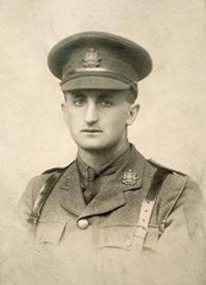
Nowell Oxland was the youngest son of the Vicar of Alston in the High Pennines. His most famous poem 'Outward Bound'(1), written on route to Gallipoli in July 1915, invokes the invasion by the Greeks at Troy across the Dardanelles (2), but draws us back to the rolling hills of Cumberland. Landing at Suvla Bay on 6 August 1915 his Battalion prepared to attack the following day. Oxland died of wounds two days after the 6th Border's Brigade had taken Green Hill and Chocolate Hill. He was buried in the Green Hill Cemetery, Gallipoli.(3)
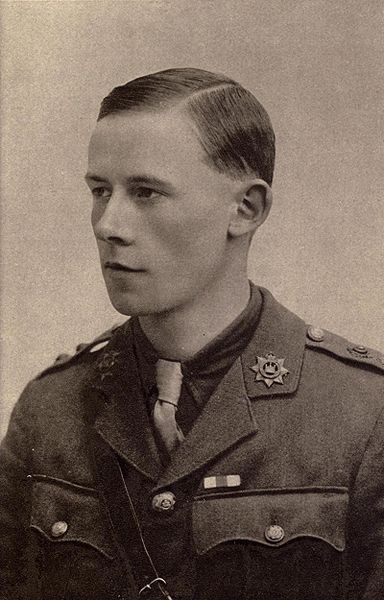
Durham school pal William Noel Hodgson, the renowned war poet Edward Melbourne (4), fighting with the Devonshire Regiment was devastated to learn of his friend's death and composed a poem in his memory.(5)
In a letter to his sister Stella he wrote;
“Thanks very much for the moss from the Gable, which I burned at evening
in memory of Oxland who died in the Dardanelles a fortnight… ago, and was
my great companion in my hill climbs. I shall miss him much; also three more
school pals who were in Saturday’s list”.(6)
Despite surviving the battlefield at Loos, Fricourt and Mametz, Hodgson too was killed in action on the first day of the Battle of the Somme 1916.
Both families released posthumous volumes of their poetry (7), however, perhaps the most poignant memorial to Oxland remains in his Father's former parish church, St Augustine's, Alston, where painted panels either side of the altar depicting St Michael and St George clearly show the face of Lieutenant Nowell Oxland.(8)
OUTWARD BOUND by Nowell Oxland (extract)
There’s a waterfall I’m leaving
Running down the rocks in foam,
There’s a pool for which I’m grieving
Near the water-ouzel’s home,
And it’s there that I’d be lying
With the heather close at hand
And the curlews faintly crying
Mid the wastes of Cumberland.
While the midnight watch is winging
Thoughts of other days arise,
I can hear the river singing
Like the Saints in Paradise;
I can see the water winking
Like the merry eyes of Pan,
And the slow half-pounder sinking
By the bridge’s granite span.
Ah! to win them back and clamber
Braced anew with winds I love,
From the river’s stainless amber
To the morning mist above,
See through cloud-rifts rent asunder
Like a painted scroll unfurled,
Ridge and hollow rolling under
To the fringes of the world.....
Nemo enim ipsam voluptatem quia voluptas sit aspernatur aut odit aut fugit, sed quia consequuntur magni dolores eos qui ratione voluptatem sequi nesciunt. Neque porro quisquam est, qui dolorem ipsum quia dolor sit amet, consectetur, adipisci velit, sed quia non numquam eius modi tempora incidunt ut labore et dolore magnam aliquam quaerat voluptatem.
Nemo enim ipsam voluptatem quia voluptas sit aspernatur aut odit aut fugit, sed quia consequuntur magni dolores eos qui ratione voluptatem sequi nesciunt. Neque porro quisquam est, qui dolorem ipsum quia dolor sit amet, consectetur, adipisci velit, sed quia non numquam eius modi tempora incidunt ut labore et dolore magnam aliquam quaerat voluptatem.
Nemo enim ipsam voluptatem quia voluptas sit aspernatur aut odit aut fugit, sed quia consequuntur magni dolores eos qui ratione voluptatem sequi nesciunt. Neque porro quisquam est, qui dolorem ipsum quia dolor sit amet, consectetur, adipisci velit, sed quia non numquam eius modi tempora incidunt ut labore et dolore magnam aliquam quaerat voluptatem.
William Noel Hodgson MC c.1915
_cropped_and_retouched.jpg)
Notes:
1. Oxland, Nowell - Outward Bound - The Times (Aug 1915)
3. Cooper, Stephen - The Final Whistle: The Great War in Fifteen Players (2013)
4. Hodgson, William Noel (“Edward Melbourne”) – Before Action – The New Witness (June 1916)
5. Hodgson William Noel - In Memory of Nowell Oxland, Killed at Suvla Bay 9th Aug 1915 (1915)
6. www.acenturyback.com/2015/09/06 - Josh Levithan (6 Sept 2015)
7. www.thenorthernecho.co.uk/history - (24 Feb 2014)
8. cumbrianwarmemorials.blogspot.co.uk - Alston (24 Dec 2011)
© Copyright 2026. All rights reserved.


